

Living with dry AMD? You may have been told there is nothing to be done.
For many years, that was true. If you have dry age-related macular degeneration (AMD), the NHS still describes support such as low vision aids and lifestyle advice rather than a treatment for the condition itself.
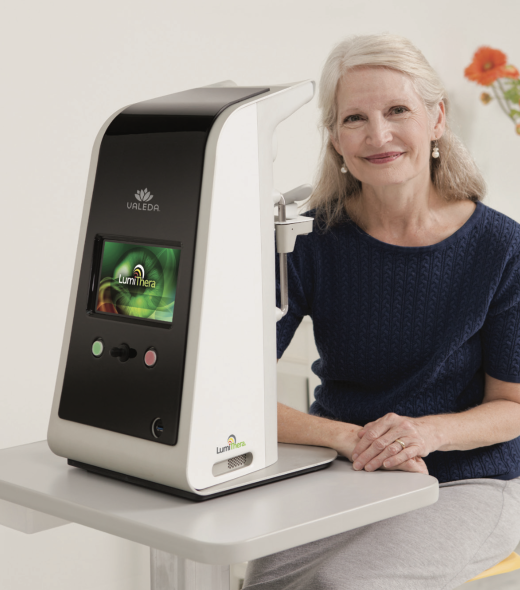
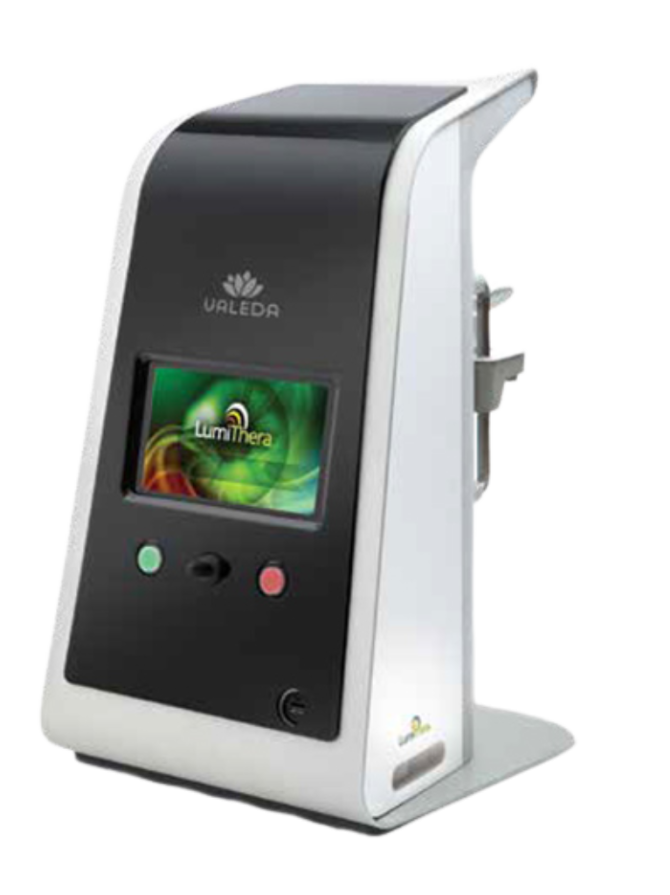
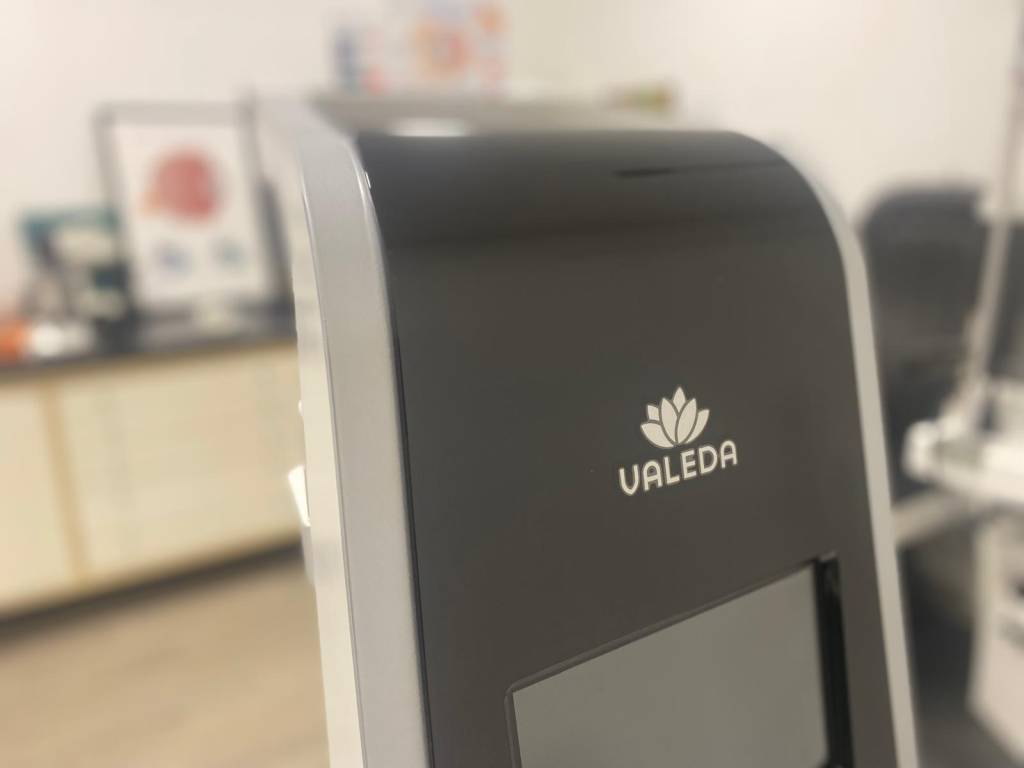
That is changing. The LumiThera Valeda Light Delivery System is the first device to receive FDA marketing authorisation as a treatment for vision loss in dry AMD. We offer Valeda Light Therapy here at our independent practice in Renfrew, just outside Glasgow, as one of the few places in
Scotland providing this macular degeneration treatment with LumiThera technology.
It does not cure dry AMD, and we will never promise that it does. What it offers is a drug-free, injection-free option for suitable patients who want to do more than watch and wait.
Every Valeda treatment starts with a full macular assessment by our optometrist, including a
retinal OCT scan. Treatment goes ahead only if your eyes meet the clinical criteria. If Valeda isn’t
right for you, we’ll tell you plainly and explain your other options.


What Is Dry AMD?
Dry AMD is the most common cause of vision loss in people over 65. It damages the retina, making it harder to read, drive, recognize faces, or see in low light.
It happens when the light-sensing cells in the macula, the small central part of the retina
responsible for detailed vision, slowly lose their ability to work. Yellow deposits called drusen
build up beneath the retina. Over time this can lead to thinning of the macula (geographic
atrophy). Dry AMD usually progresses slowly through early, intermediate and late stages. This is
why regular eye examinations matter so much.
Symptoms May Include:
Blurry or fuzzy vision
Straight lines appear wavy
Difficulty adapting to low light
Reduced brightness of colors
Loss of central vision
Early treatment makes a difference. Once retinal cells are lost, they cannot be restored. That’s why starting Valeda Light Therapy early is essential.
Important: sudden distortion or a rapid drop in central vision can be a sign of wet AMD, which
needs urgent care. If this happens, contact us or NHS 24 (111) the same day.
CLINICAL RESULTS
Treatment with Valeda Light Therapy improves visual acuity and contrast sensitivity and reduces central drusen volume.
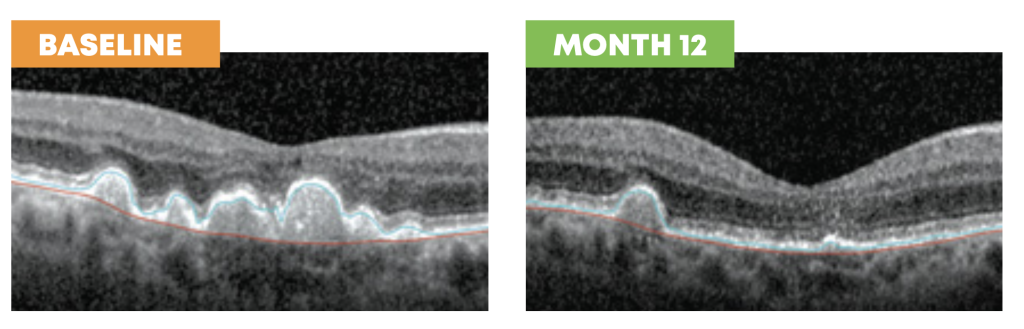
In the LIGHTSITE III randomised trial, patients receiving light therapy for macular degeneration
with LumiThera’s Valeda system were compared with patients receiving a sham (placebo)
treatment. After about two years, the treated group showed a mean improvement of roughly one
line on the eye chart compared with patients who were not treated. The OCT scans below show a
central drusen reduction at baseline and month 12 in one patient. Individual results vary.
Watch: How a LumiThera Valeda Treatment Session Works
This short video from LumiThera shows what happens during a session. You sit comfortably, look
into the device and watch a series of gentle light patterns. Nothing touches your eye.
Dry AMD is a degenerative disease and may result in vision loss
These images simulate how dry AMD can gradually blur the centre of what you see, and how
central vision can be lost as the condition advances. For many families, the main worry is how to
slow vision loss in elderly parents and grandparents before everyday independence is affected.

How Valeda Light Therapy Works?
Valeda uses specific wavelengths of light-590nm, 660nm, and 850nm-to stimulate energy production in damaged retinal cells.
This process is called Photobiomodulation (PBM). It helps:
Restore cellular metabolism (via ATP production)
Reduce inflammation
Inhibit cell death
Improve oxygen utilization
In simple terms: Valeda helps the eye heal itself naturally using the power of light.
Because the light is delivered from outside the eye, this LumiThera non-invasive eye treatment
involves no injections, no surgery, no medication and no dilating drops.
Who Is Suitable for Valeda Treatment?
LumiThera dry AMD therapy is designed for people in the earlier stages of the condition. Valeda
may be suitable if you:
- Have been diagnosed with early or intermediate dry AMD with drusen
- Still have useful central vision (roughly 6/9.5 to 6/21 on the eye chart, equivalent to 20/32–
20/70) - Do not have wet AMD or geographic atrophy at the centre of the macula
Valeda is not suitable for people with wet (neovascular) AMD, people with light sensitivity, or
people with a history
WHAT TO EXPECT?
Your Valeda Light Therapy Journey at Auptician
- Macular assessment. A full eye examination with an OCT retinal scan confirms your diagnosis
and whether dry AMD therapy with LumiThera is right for you. - Treatment course. One course is 9 short sessions over 3–5 weeks, usually 3 per week. Each
eye is treated in turn, and you can go home straight afterwards. - Repeat courses. In the clinical trials, courses were repeated about every 4 months. We review
your vision and scans regularly so you can see how you are responding. - Ongoing care. We continue to monitor your macula, give lifestyle and nutrition advice, and refer
you to a hospital eye service straight away if your condition changes.
Cost: Valeda is a private treatment and is not currently funded by the NHS. Ask us for current pricing
WHY CHOOSE US?
Why Choose Auptician for Valeda Treatment in Renfrew?
- An independent practice led by Ahmed Qazi, a GOC-registered optometrist (GOC no. 01-24578) with more than
12 years’ experience in eye care - Advanced in-practice imaging, including OCT, to assess and monitor your macula
- The full LumiThera macular degeneration treatment programme in one place, from assessment
to repeat courses - Honest advice: if Valeda is unlikely to help you, we will say so
- Part of our wider macular care, alongside Macular Screening and Low Vision Services
- Easy to reach at 55 Hairst Street, Renfrew PA4 8QU, close to Glasgow, Paisley and the West
End
FAQs About Valeda Light Therapy
Not at all. It’s comfortable and non-invasive, with no eye drops or injections required. You simply
look into the device while it shines gentle, bright light into your eye. As a non-invasive eye
treatment with LumiThera technology, nothing touches the eye. Some people notice brief afterimages, which fade within a few minutes.
A course of Valeda treatment is 9 sessions over 3-5 weeks, usually 3 per week. In the clinical
trials, courses were repeated about every 4 months, over two years. Your optometrist will plan a
schedule with you.
Yes. Valeda has been studied in several randomised controlled trials (the LIGHTSITE studies).
These showed a good safety profile, with no serious treatment-related side effects reported. It is
FDA-authorised in the USA. It is not suitable for people with light sensitivity, wet AMD, or lighttriggered seizures or migraines. We screen for these before treatment.
No. There is currently no cure for dry AMD, and we will never claim otherwise. Valeda Light
Therapy aims to improve or stabilise vision and slow disease progression in suitable patients. In
trials, treated patients gained on average about one line on the eye chart compared with untreated
patients after two years. Results vary from person to person.
Book a consultation online, Call us on 0141 885 1749 or email team@auptician.co.uk. Your first appointment is a
full macular assessment, which confirms whether Valeda is suitable for you.
LumiThera is the company that developed the Valeda Light Delivery System. Valeda uses
photobiomodulation: low-level light at 590nm, 660nm and 850nm supports the energy-producing
mitochondria in retinal cells. LumiThera light therapy for macular degeneration was the first of its
kind to receive FDA authorisation, in November 2024.
The light treatment itself takes only a few minutes per eye. Allow around 15-20 minutes for the
whole appointment.
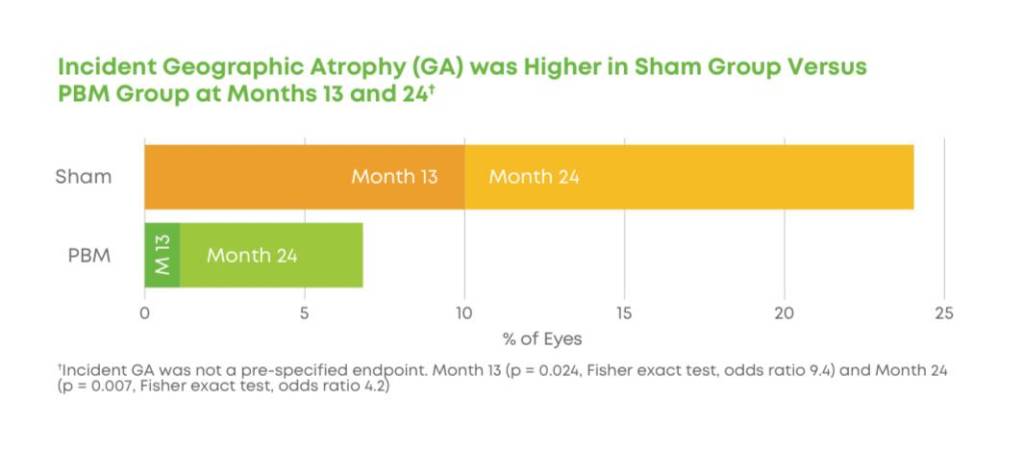
Valeda cannot fully prevent vision loss, and it cannot restore cells that have already been lost. In
the LIGHTSITE III trial, however, treated patients developed less new geographic atrophy than the
sham group. This is why we encourage older adults with early or intermediate dry AMD to be
assessed sooner rather than later.
Not at present. In the UK, Valeda Light Therapy is offered privately. NHS care for dry AMD
currently focuses on monitoring, low vision support and lifestyle advice.
The cost depends on whether one or both eyes are treated.
Please call us for current pricing, which we confirm at your assessment.
In many cases, yes. Cataracts and previous cataract surgery do not usually rule you out. We take
them into account at your assessment.
No. Valeda is only for dry AMD. Wet AMD needs urgent hospital treatment, usually with eye
injections. If you notice sudden distortion or loss of central vision, contact us or NHS 24 (111) the
same day.
Usually, yes. No dilating drops are used. If you see after-images, wait a few minutes until they
fade before you drive.
Valeda does not replace other advice. If your optometrist has recommended AREDS2-type
supplements, a healthy diet, UV protection or stopping smoking, keep following that advice
alongside your treatment.
Explore more about the effectiveness of Valeda Light Therapy treatment
These links take you to the published clinical evidence behind Valeda, for patients and clinicians
who want to read the research in full.
Clinically reviewed by: Ahmed Qazi, BSc. (Hons) Optom, MCOptom, Dip IP, Prof Cert Glaucoma, PGDip Ocular Therapeutics. GOC-registered Optometrist (GOC no. 01-24578)